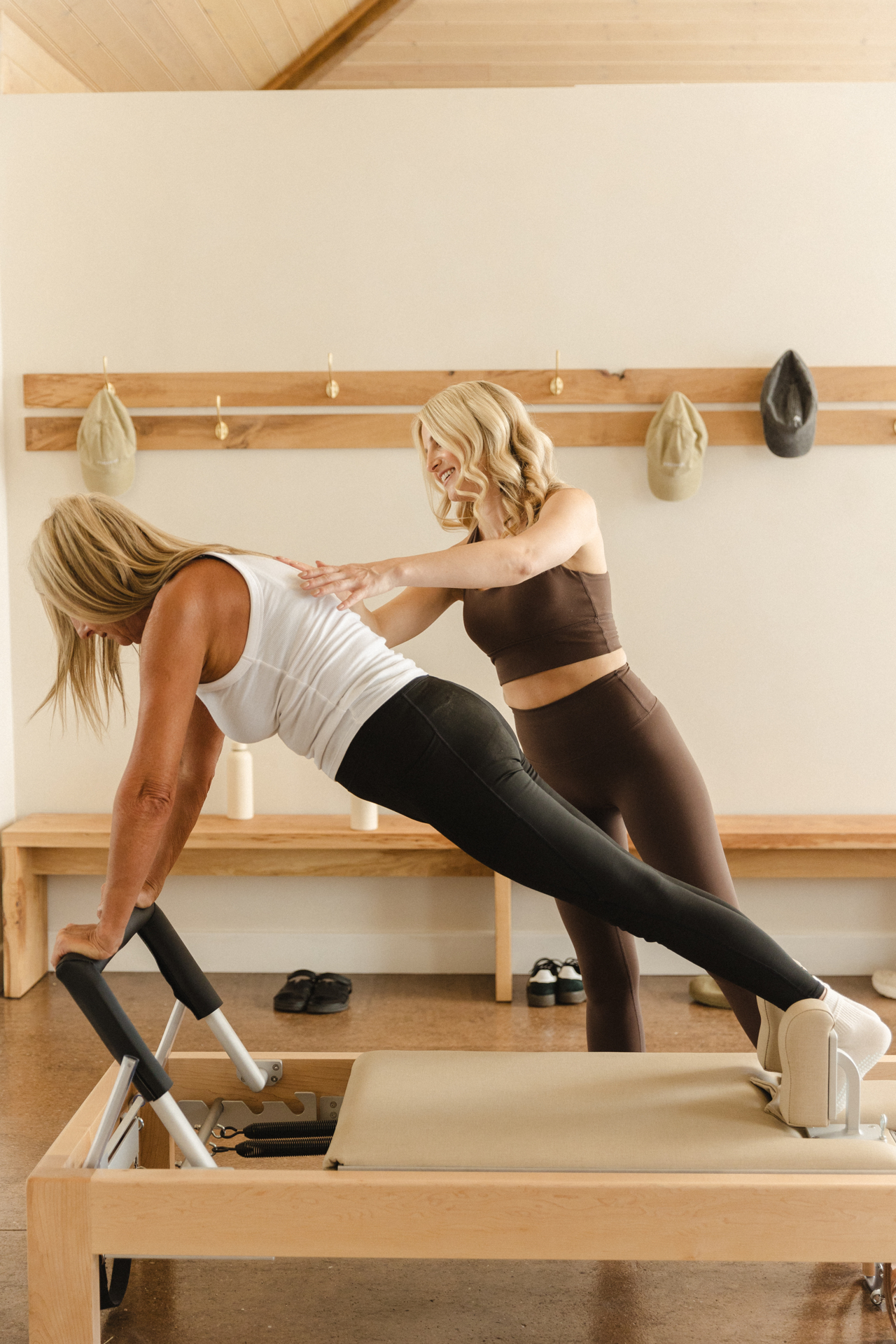
Footwork is the first exercise of the classical reformer order. You lie on the carriage, press the footbar away with your feet and return with control. It looks simple. It is where you and your teacher find out how the body is moving that day.
Setting up
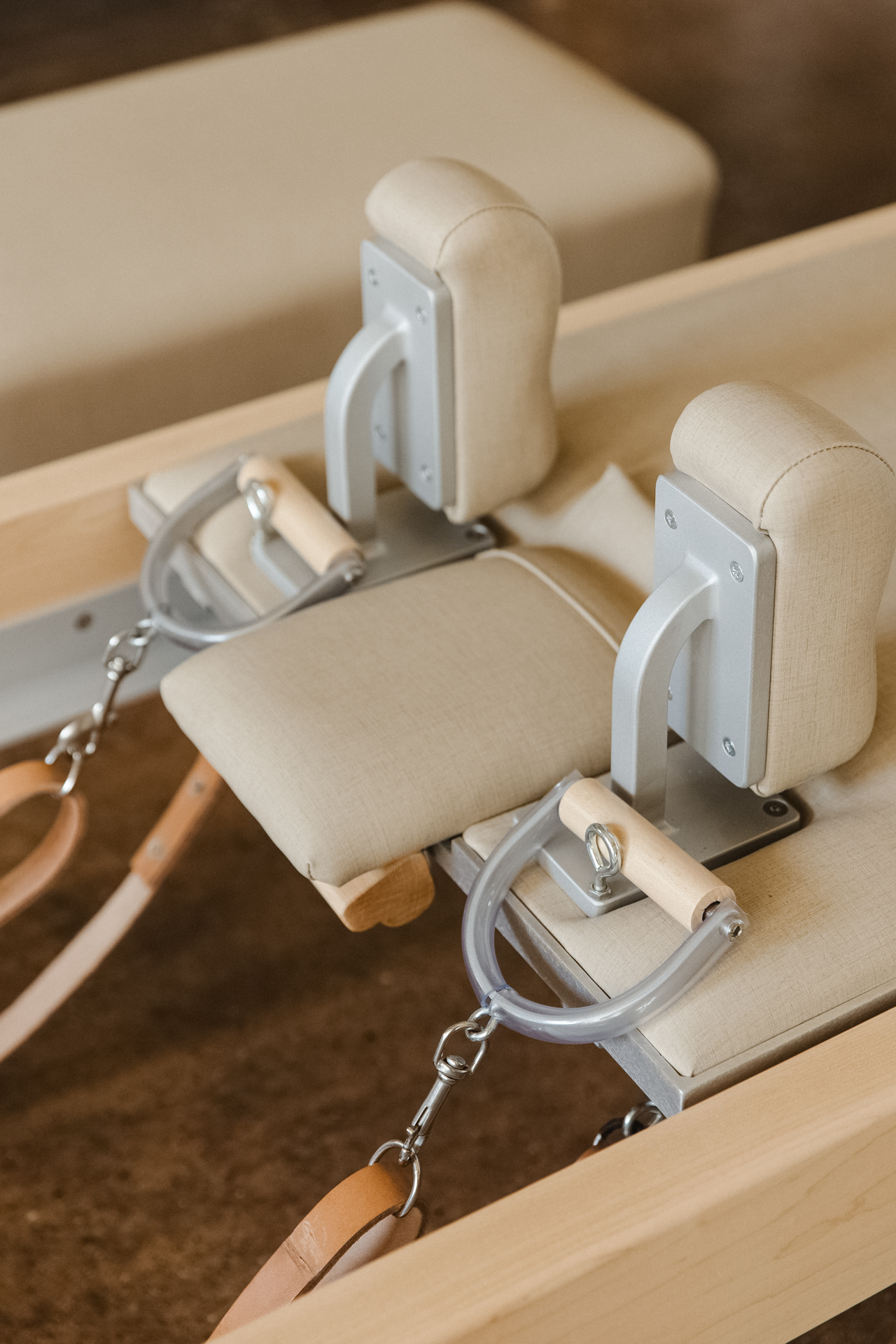
- Lie on your back on the carriage, with your head on the headrest and shoulders against the shoulder blocks.
- Your teacher will set the springs for you. Spring settings vary with the reformer and the person, so there is no single right number.
- Place your feet on the footbar for the first position, with your arms long by your sides.
The four positions
- Toes — heels together, toes apart in a small V, on the balls of the feet.
- Arches — the bar under the arches of the feet.
- Heels — the bar under the heels, feet flexed.
- Tendon Stretch — on the balls of the feet; press out, then lower the heels under the bar and lift them again.
In each position you push the carriage out until the legs are straight, then bring it home slowly, usually for around ten repetitions.
What your teacher may say
- "Come home slowly." The return matters as much as the push. Try not to let the carriage bang against the stopper.
- "Keep the knees in line with the feet."
- "Straighten, don't lock." Reach the legs long without pushing the knees back hard.
- "Keep the back steady." The pelvis stays quiet on the carriage while the legs work.
Before and after
Footwork opens the reformer session. The Hundred comes next, then Frogs and Circles, Coordination and Rowing.