
Equipment Library
Reformer
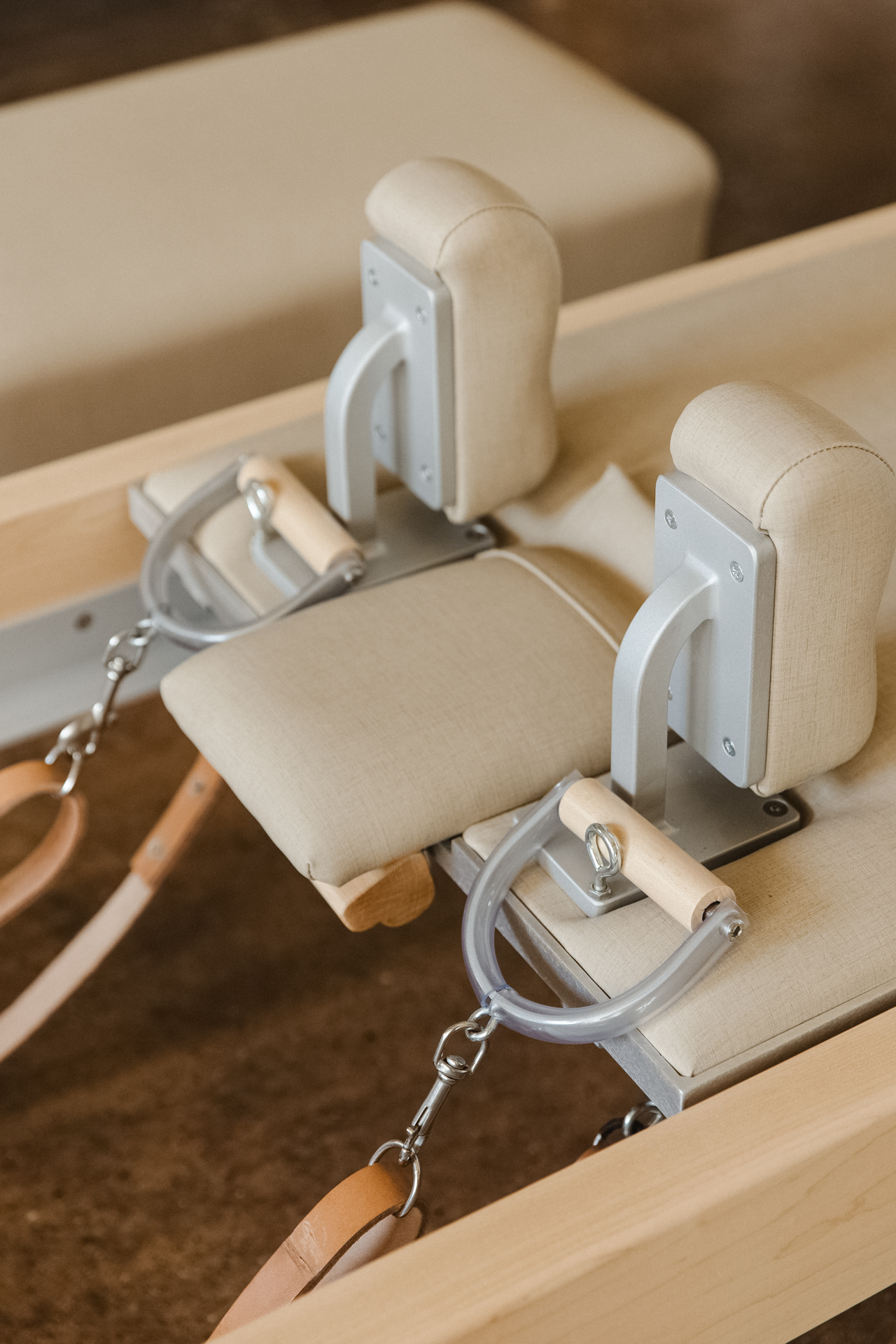
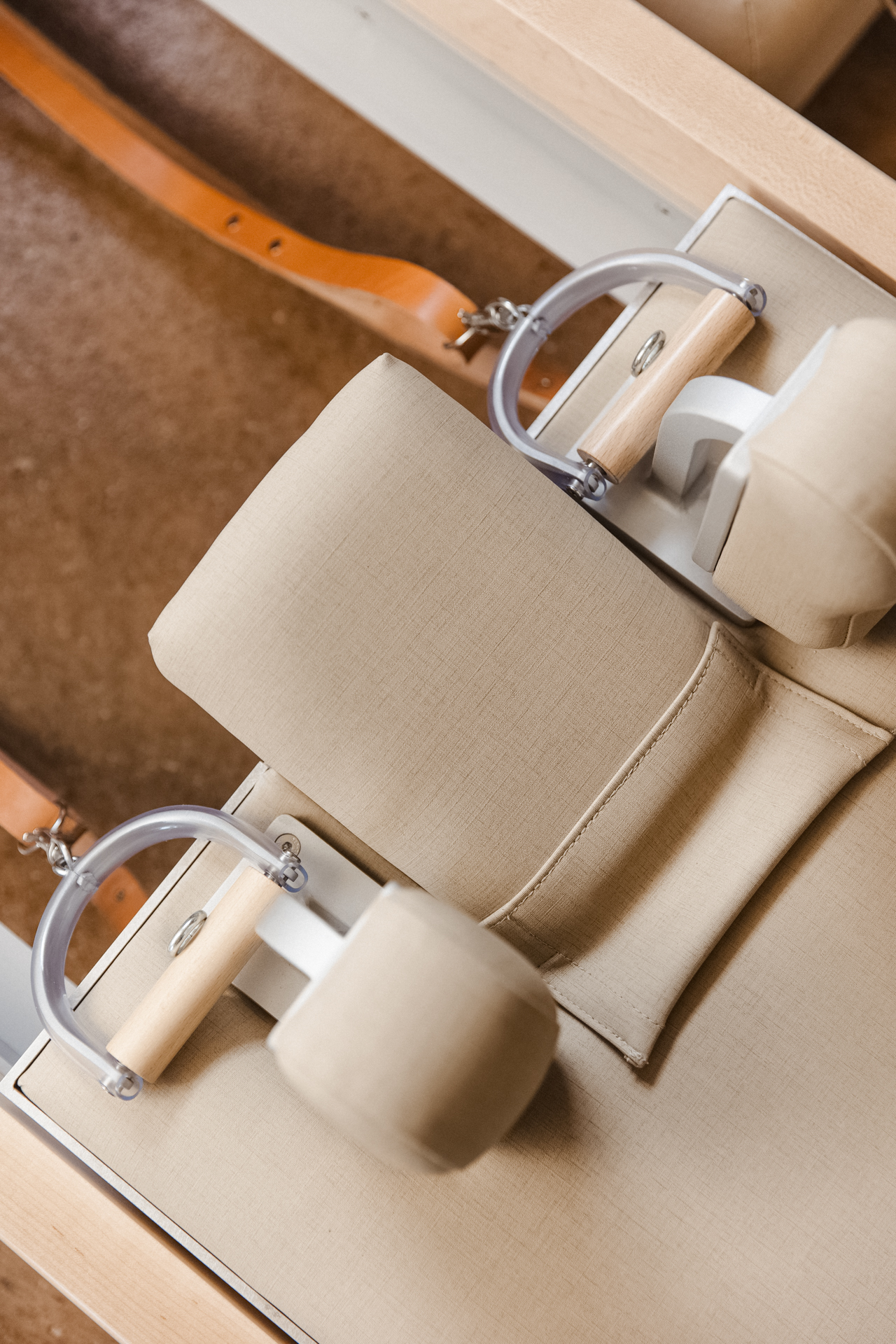
A spring-loaded sliding carriage — the most versatile piece of classical apparatus.
Purpose
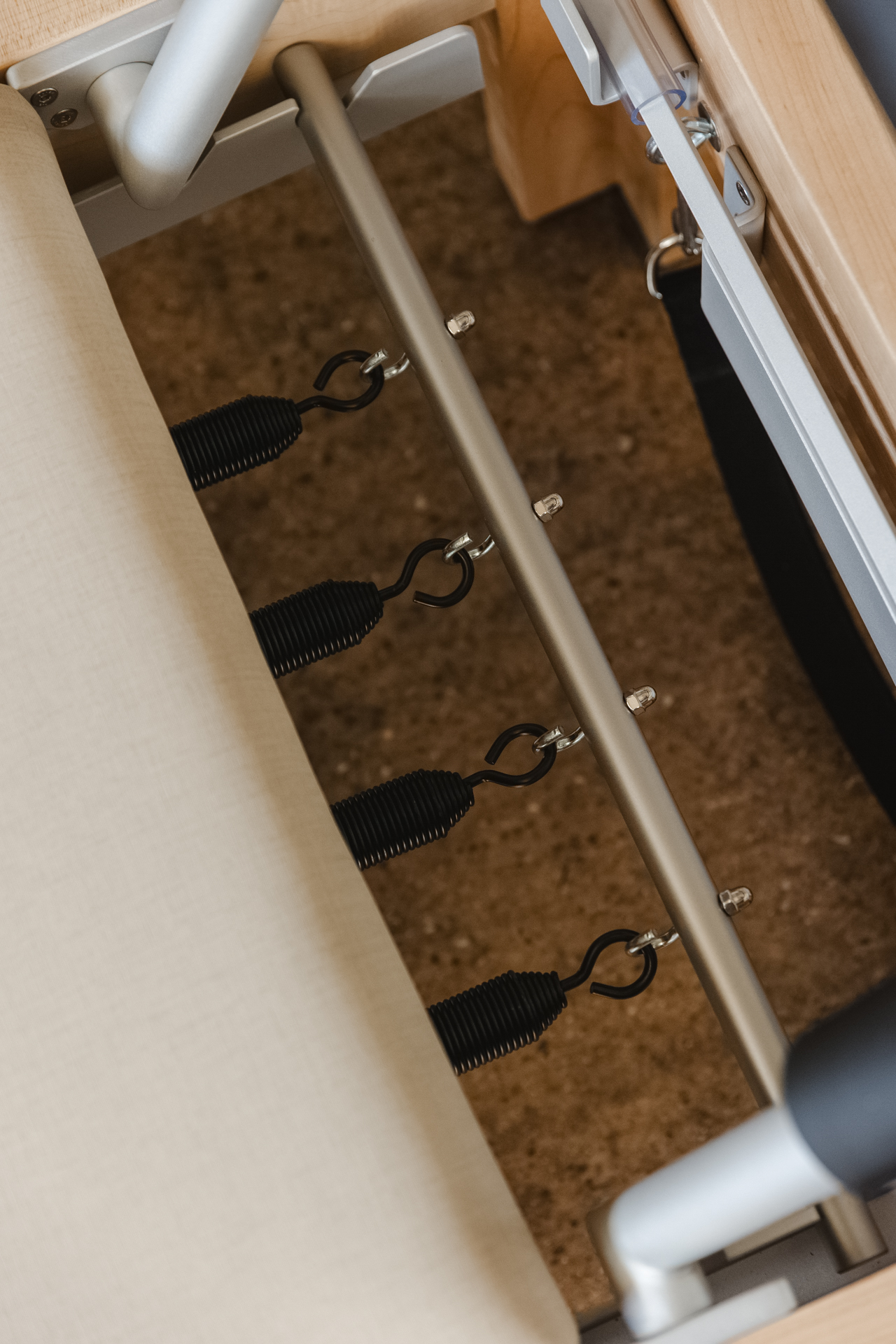
The reformer teaches the mat work with feedback the floor cannot give. Springs provide variable resistance and assistance; the carriage rewards control and exposes momentum. It is the apparatus most people meet first because it does the most jobs in one place — footwork, arm work, abdominal work, hip work, back extension, standing work.
Benefits
- Full-body strength trained through range, not just at the end of it
- Precise feedback: the carriage moves cleanly or it doesn't
- Suitable for injury rehabilitation and high-level performance in the same session
- Coordinates breath, powerhouse and limbs in a single ordered system
Who it's for
- New clients, from the very first private
- Rehabilitation clients working with a specialist teacher
- Athletes, dancers and riders seeking transferable strength
- Anyone who has been told 'you have a weak core' and wants a thorough answer
Common misconceptions
- 'Is it like equipment at the gym?' The reformer uses a moving carriage and springs to bring whole-body coordination into each exercise.
- 'You need to be strong to start.' You need to be willing to start; the springs meet you where you are.
- 'Reformer is harder than mat.' Often the opposite — the reformer supports; the mat demands.
Frequently asked
- Do I need any experience?
- No. Every new client begins with an introductory private so we can introduce you to the reformer's mechanics.
- How many springs should I use?
- Your teacher chooses. Springs are not weights to compete with — they are the correct amount of resistance for the exercise and the person.
- How often should I use it?
- Two or three times a week is a common, sustainable rhythm — alongside mat work at home.
Come and see it
Experience it in the studio.
Reading about the apparatus is one thing. Meeting it in a private session is another.
Book a private →