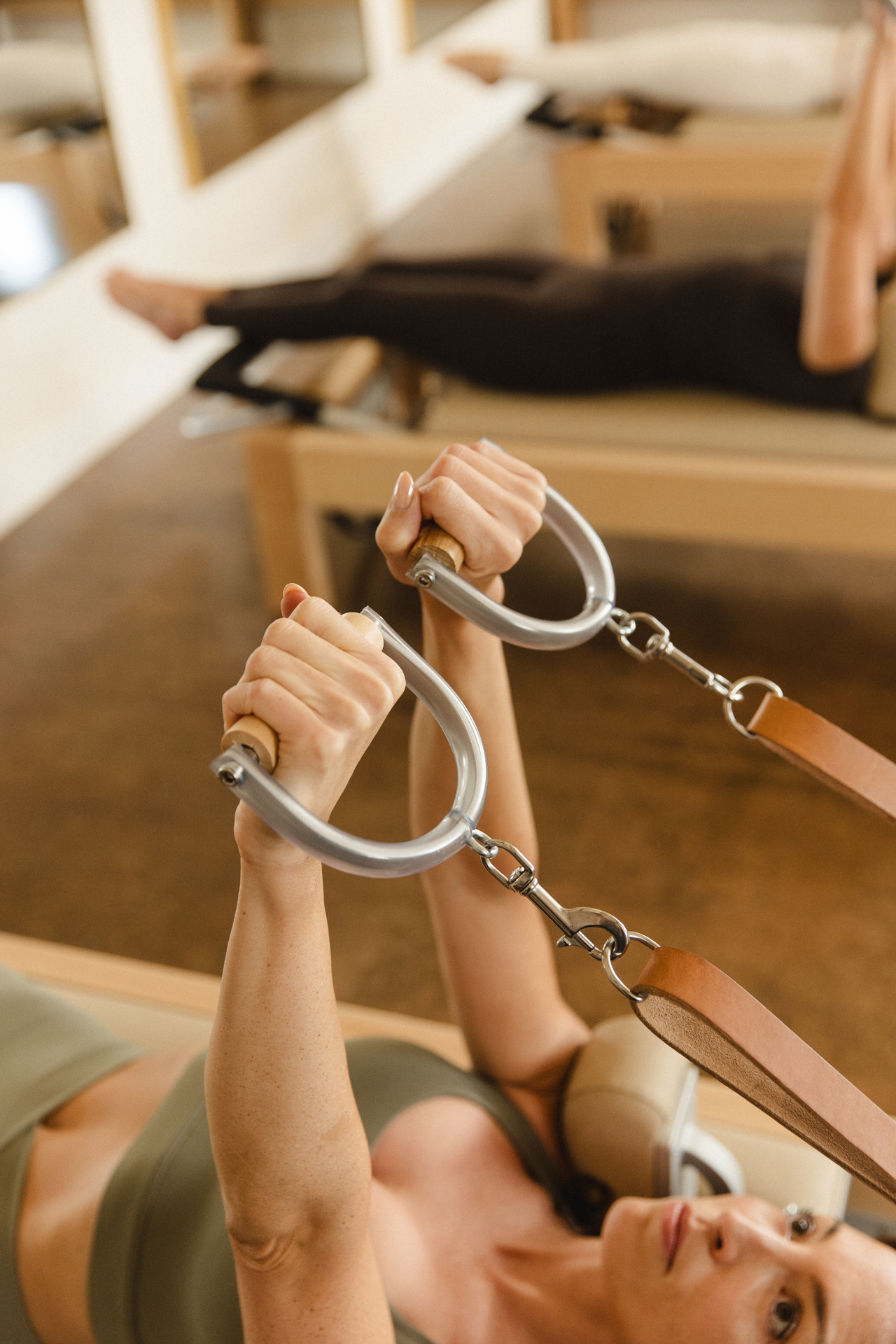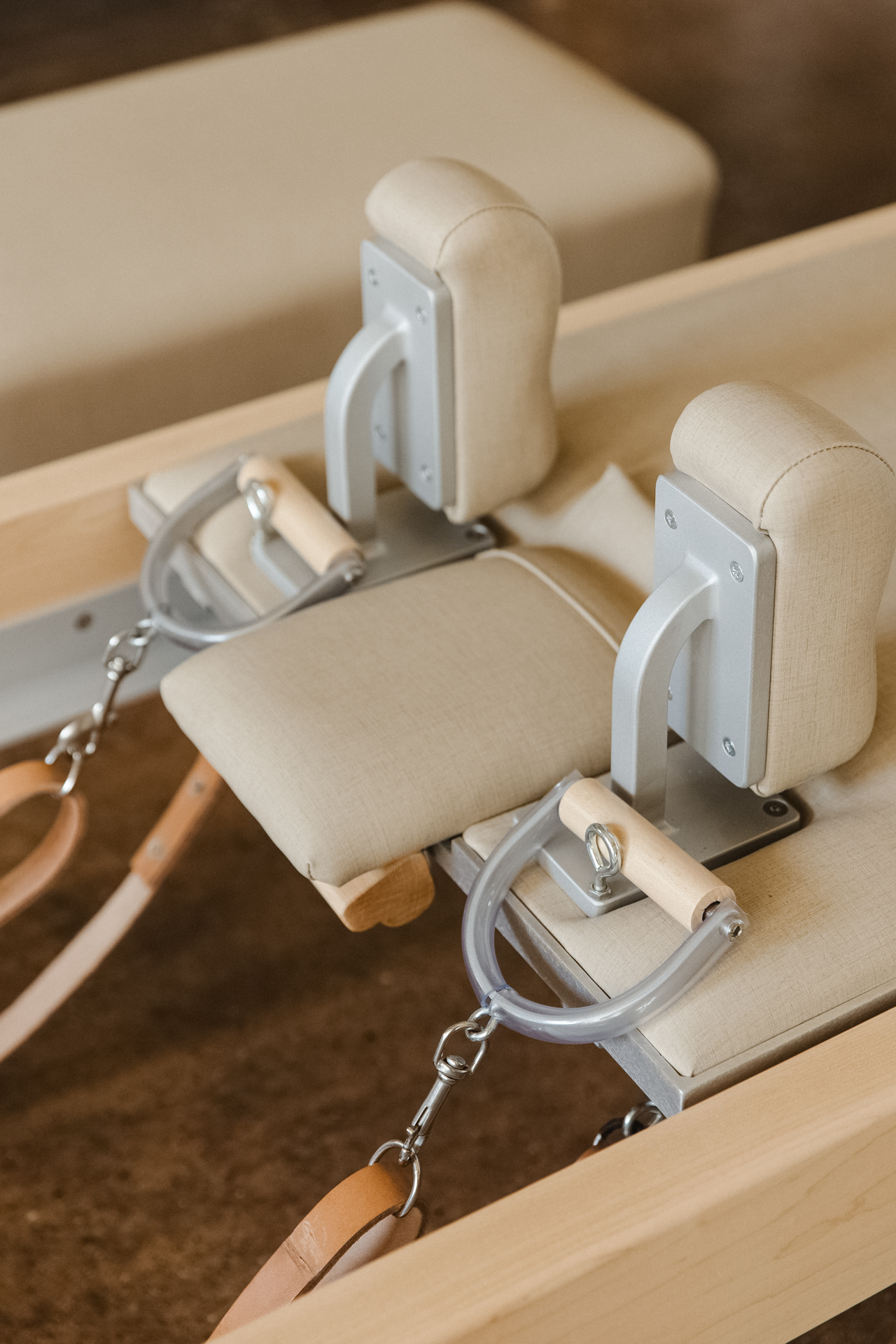
Familiar cues such as “sit up straight” can be a starting point, but posture is also about how you move and find support throughout your day. In the studio, we explore comfortable alignment and the strength and mobility that help you use it.
A simple reference line
In standing, teachers often look at a line through the ear, shoulder, hip, knee and ankle. It is a reference point, not a position to hold rigidly. Everyone's body is different, and there is no single perfect posture.
Moving well, not standing still
Research has not found that one particular posture prevents pain. What tends to help is variety: changing position often, staying active and building strength and mobility. Pilates is one enjoyable way to do that.
Posture is something you return to, not something you hold.
How to practise it
- Try a gentle roll-down at the wall once a day.
- If you sit for long periods, get up and move every so often.
- Take a few slow breaths, letting the ribs widen and the shoulders settle.
- Practise regularly with a teacher, who can show you what to notice.